ServicesVinyl Composition Tile
Vinyl Composition Tile in Seabrook
Vinyl composition tile, or VCT, is the hard-wearing square tile you see in schools and stores. In your home it fits laundry rooms, utility rooms, playrooms and workshops. We help you plan it, price it and lay it before a worn floor turns into a rushed job.
What VCT Is and When It Makes Sense
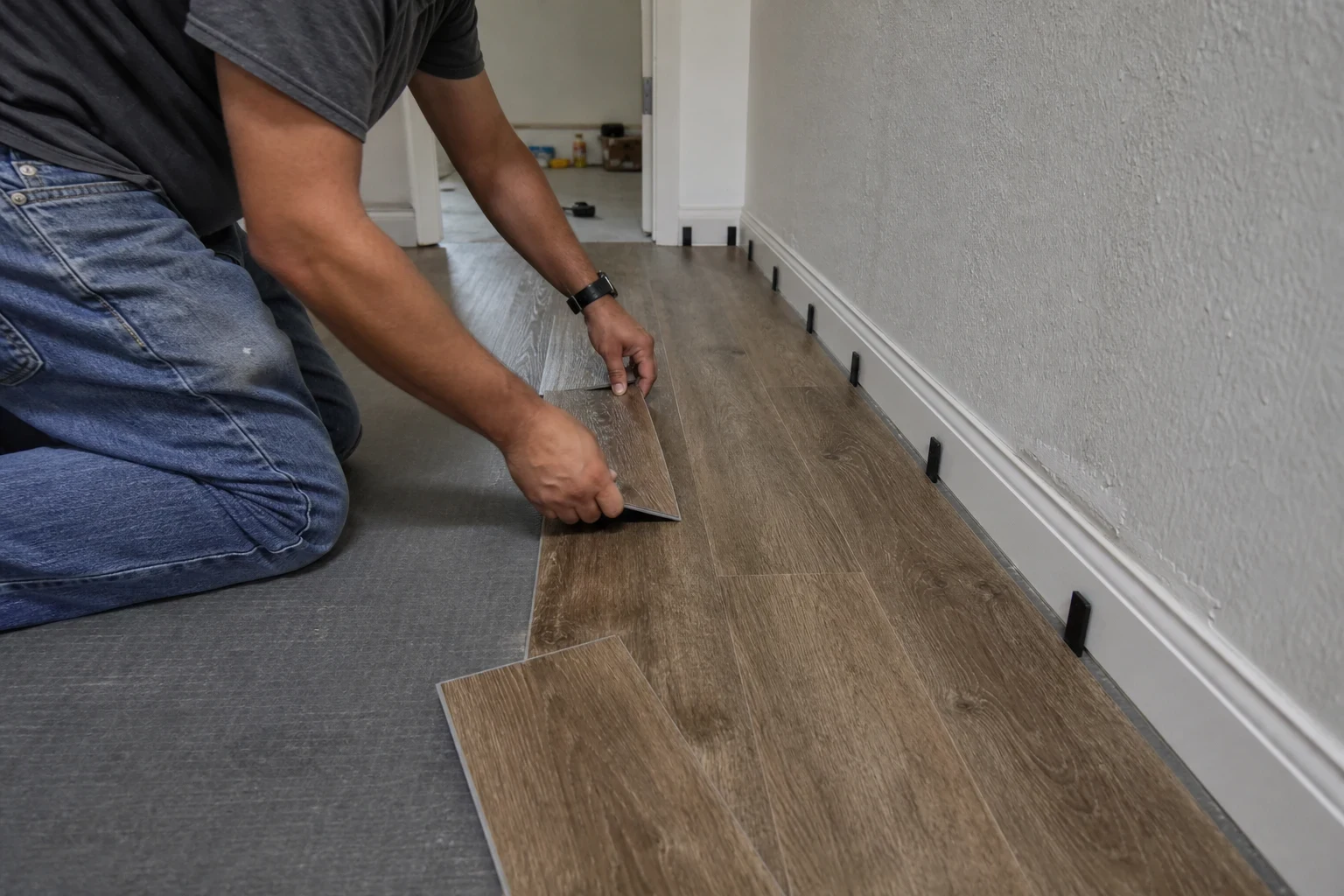
VCT is made mostly of limestone filler bound with vinyl. The tiles are usually 12 inches square and about an eighth of an inch thick. They are glued to the floor one by one, then sealed with several coats of floor finish. The result is a hard surface that shrugs off scuffs, dropped tools and muddy shoes.
It is the right call when you want a durable floor in a room that works hard and you do not need it to look like wood. It costs less per square foot than most options and comes in a wide range of solid and flecked colors, so checkerboards and borders are easy. It is not waterproof like luxury vinyl tile, and it needs some upkeep. If a room sees standing water or you want a softer, warmer look, we will tell you so and point you to luxury vinyl tile or luxury vinyl plank instead.
What the Job Includes
Measuring and layout
We measure the room and plan where the tile lines will fall, so you do not end up with thin slivers at a doorway. If you want a pattern, we sketch it out before anything is ordered.
Removing the old floor
We pull up carpet, sheet vinyl or newer tile and haul it away. Old 9-inch tiles and the black glue under them can contain asbestos in older homes. We will not disturb those until they have been tested.
Slab and subfloor prep
VCT shows every bump and seam underneath it. We grind high spots, fill low spots and cracks, and skim the floor smooth. On concrete slabs we check moisture first, because damp slabs break down the adhesive.
Setting the tile
We spread a thin, even coat of adhesive, let it tack up, then lay the tile tight and roll it so it bonds fully. Cuts go around door jambs, cabinets and floor drains.
Finish coats and trim
Once the tile is set, we apply coats of floor finish that give it shine and protect it. Then we put back or replace base trim and transitions at doorways.
Signs It Is Time to Plan a New VCT Floor
Tiles lifting at the corners
Curling corners mean the glue has let go. Once one goes, the ones next to it usually follow, and the edges catch on feet and carts.
Cracked or missing pieces
A few broken tiles can sometimes be swapped out. When they are spread across the room, it is usually cheaper to plan a full replacement than to keep patching.
Worn carpet in a working room
Carpet in a laundry room, craft room or garage conversion holds dirt and stains fast. VCT is a common, low-cost step up for those spaces.
Dark, dull traffic paths
If scrubbing no longer brings the color back, the wear has gone past the finish into the tile itself.
A remodel on the calendar
New washer and dryer or new cabinets coming in. Put the floor down first so it runs under them and you only move appliances once.
How a VCT Job Runs
- 1
Phone call and planning
Share which room it is, the flooring in it today and the timing you have in mind. We talk about colors, layout and scheduling so you can budget ahead instead of reacting to a failing floor.
- 2
Look at the floor
We check the slab or subfloor for cracks, moisture and dips, and look at what is coming up. You get a written, line-by-line estimate so you know where the money goes.
- 3
Prep day
We clear the room, remove the old floor and get the surface flat and clean. Patch compound needs time to dry, so prep and tile can land on separate days.
- 4
Tile and finish
We lay and roll the tile, then apply finish coats. Most rooms need light foot traffic only for the rest of that day and no furniture back until the finish cures.
- 5
Walkthrough and care tips
We walk the floor with you, clean up and explain simple upkeep: damp mop, use felt pads, and add a fresh coat of finish when the shine wears thin.
What Moves the Price
The tile itself is one of the less expensive parts of a VCT job. Most of the cost sits in what happens before the first tile goes down. We price each piece separately so you can see it and plan for it.
- Room size and shape
- More square feet means more tile and adhesive. Closets, angles and lots of cuts around fixtures add labor.
- Condition of the floor underneath
- A flat, dry slab is quick. Cracks, old glue ridges and uneven patches all need grinding or leveling first.
- What is coming up
- Carpet comes up fast. Glued-down tile and sheet vinyl take longer, and suspect older tile needs testing before anyone removes it.
- Pattern and color mix
- A single color laid straight is the simplest. Checkerboards, borders and inlays take more planning and more cutting.
- Moving things
- Appliances, shelving and workbenches have to come out and go back. Clearing the room yourself ahead of time keeps that part down.
VCT Questions We Hear
Something not covered here? (346) 676-8873
Is VCT the same as luxury vinyl tile?
No. VCT is a harder, thinner tile made mostly of limestone, and it needs finish coats to look its best. Luxury vinyl tile is thicker, softer underfoot, printed to look like stone or wood, and holds up better to water. We install both and can help you pick.
Can VCT go in a kitchen or bathroom?
It can go in a kitchen with ordinary spills. We do not suggest it for full bathrooms or anywhere water sits on the floor, because the seams are not sealed tight. For wet rooms, tile flooring or luxury vinyl is a better fit.
How much upkeep does it need?
Sweep or dust mop often and damp mop with a neutral cleaner. When the shine wears down in busy paths, a fresh coat of floor finish brings it back. Skip harsh cleaners, which strip the finish early.
Can you lay VCT over my old floor?
Sometimes, if the old floor is a single layer, firmly stuck and smooth. Most of the time we remove it, because any texture or loose spots will show through the new tile. We will tell you which way makes sense after we see it.
How long before I can use the room?
You can usually walk on it lightly the same day. Give the finish time to cure before moving heavy appliances or furniture back, typically a day or so. We will give you a clear timeline for your room.
Plan Your VCT Floor Before It Becomes a Rush
Give us a rough size of the space and a sense of how the current flooring is holding up. From there we lay out your options, a realistic timeline and the things that push the cost up or down, so you can set money aside on your own schedule.