ServicesLaminate Flooring
Laminate Flooring in Seabrook
Laminate gives you the look of wood at a lower cost, and it holds up to kids, pets and daily traffic. We measure, check your slab and walk you through products and costs, so you can plan the job for when it suits you.
When Laminate Is the Right Floor
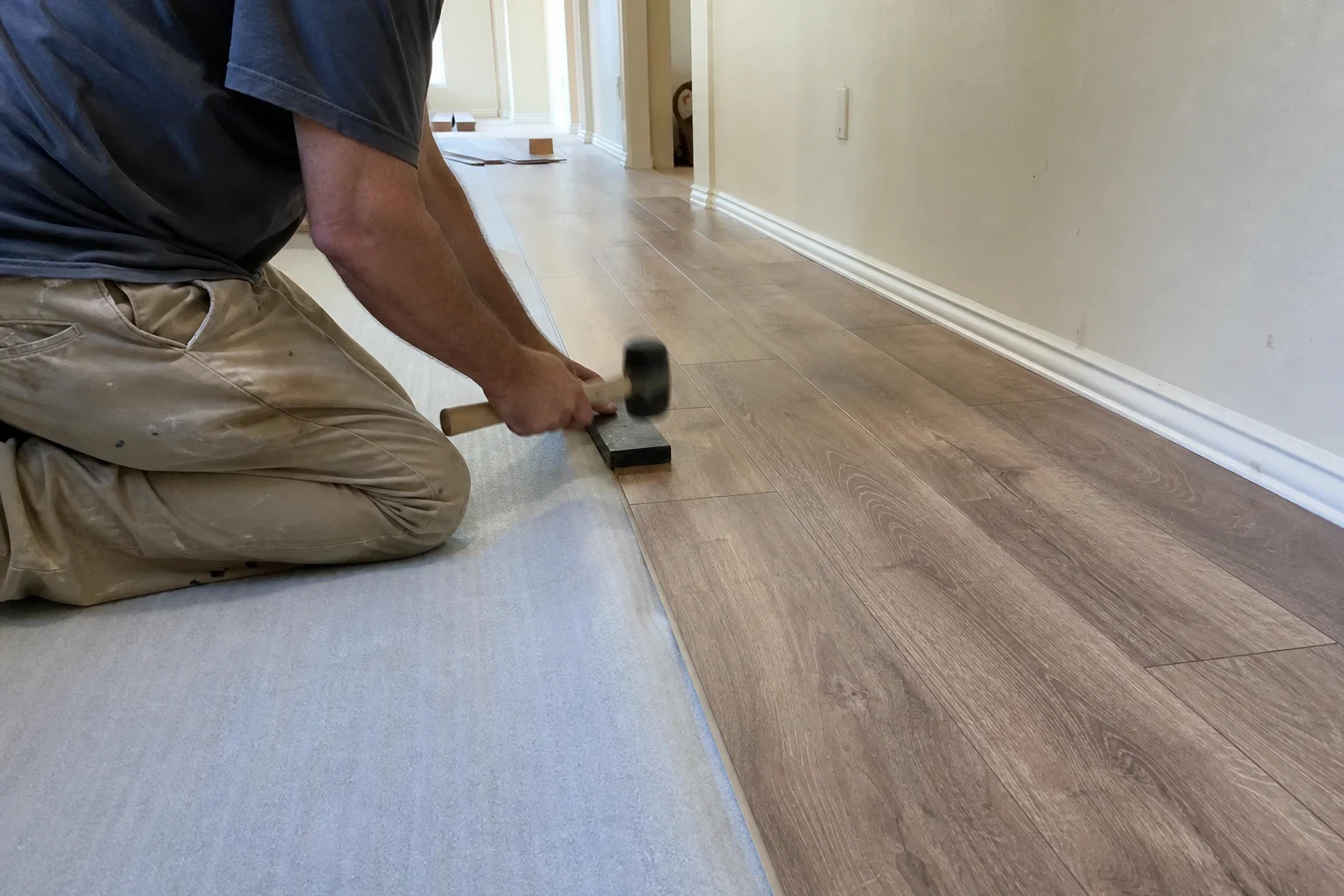
Laminate is a layered board with a printed wood or stone look under a hard wear layer. It resists scratches and dents better than most wood floors. It clicks together and floats over a pad, so it goes in faster than nailed or glued floors.
It is a good fit for living rooms, bedrooms, halls and home offices. It is a weaker fit for full bathrooms or laundry rooms, where standing water can swell the board edges. If a room sees a lot of water, we will tell you so and point you to luxury vinyl plank or tile flooring instead.
Most of our customers call before the old floor is worn out. That gives time to pick a product, line up the budget and set a date, instead of rushing after a carpet finally gives up.
What the Job Includes
- 01
Measuring and a written plan
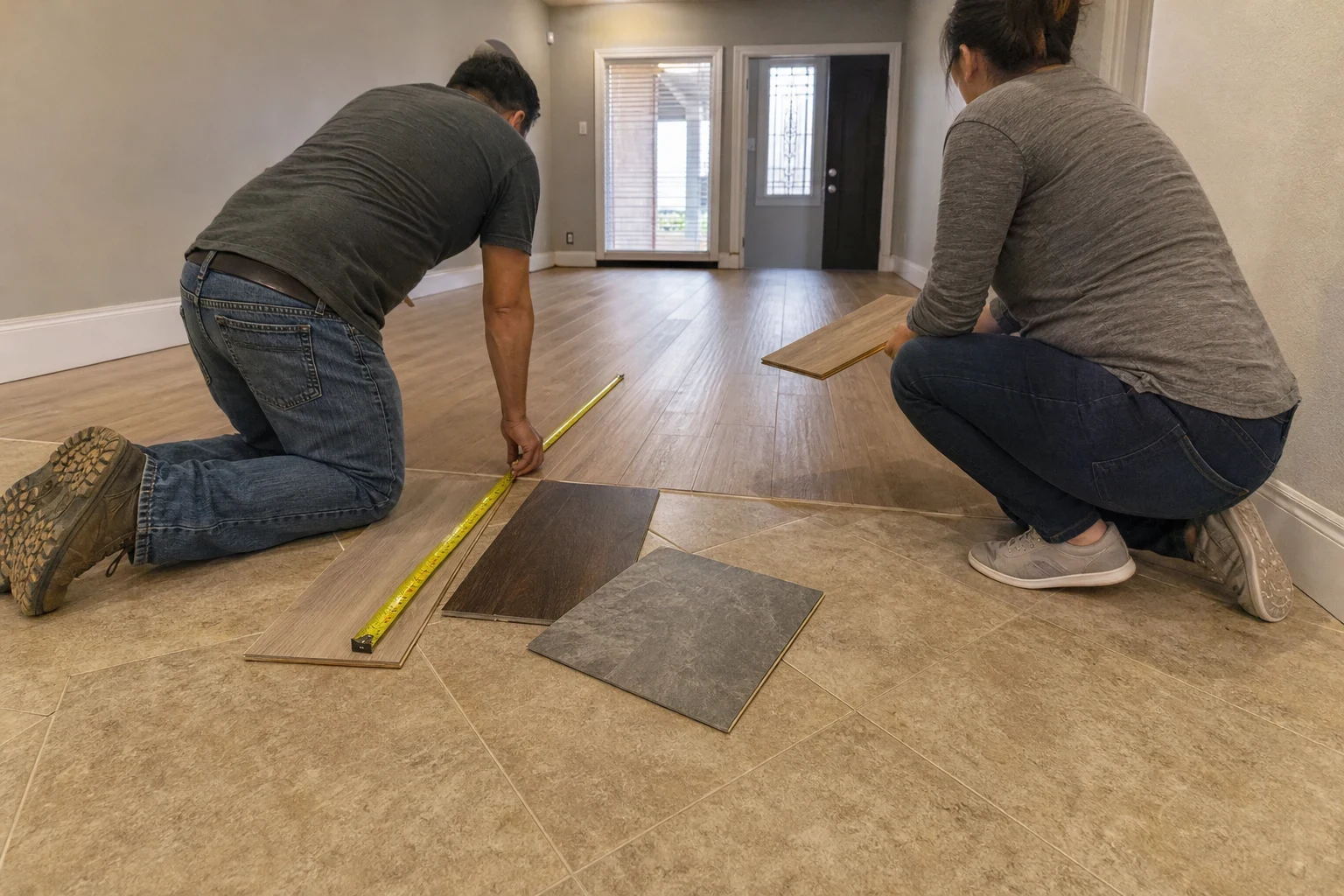
We measure every room, note doorways and closets, and write down the product, prep and trim. You see the full scope before you commit.
- 02
Old floor removal
We pull up carpet, pad, tack strip or old laminate and haul it away. Staples and glue spots come off so the new pad sits flat.
- 03
Slab check and leveling
Click-lock laminate needs a flat base. We check with a long straightedge and grind high spots or fill low ones so the joints do not flex and pop.
- 04
Moisture barrier and pad
Concrete slabs push moisture up, so we lay a vapor barrier under the pad. In a humid coastal climate, this step keeps boards from cupping later.
- 05
Trim and transitions
We leave the right expansion gap at the walls, then cover it with baseboard or quarter round. Transition strips go where laminate meets tile or carpet.
Questions about Laminate Flooring?
Call(346) 676-8873Signs It's Time to Plan New Floors
Carpet that won't come clean
Matted paths and stains that come back after cleaning mean the fibers are done. Laminate is easy to sweep and mop dry.
Old laminate with swollen edges
Raised or puffy seams usually mean water got in. Those boards will not go back down, and the damage tends to spread.
Gaps or clicking underfoot
Joints that open up or boards that click when you walk often point to an uneven slab under the floor. Fixing the base is part of the fix.
A sale or move-in coming up
If you plan to sell or move in within a year, now is the time to price it out. Scheduling early beats squeezing it in the week before.
How Your Laminate Install Goes
- 1
A call, then a walkthrough
We start with a call about the rooms, your timeline and your budget. Then we come out, measure and check the slab, and put the plan in writing.
- 2
Pick the product and the date
You choose the board, color and thickness. We set a start date that works with your schedule and have the boxes delivered early so they adjust to the room.
- 3
Prep day
We move furniture out of the way, remove the old floor and flatten the slab. Barrier and pad go down next.
- 4
Install and trim
Boards click in row by row with staggered seams and a gap at every wall. Then trim and transitions go on, and doors get checked to swing clear.
- 5
Cleanup and walkthrough
We sweep, haul debris and walk the floor with you. You get care tips, like using a damp mop, never a wet one.
What Moves the Cost
Laminate pricing comes down to the product and how much work the room needs before the first board goes in. We list each part on your quote so you can see where the money goes. Knowing this ahead of time lets you adjust the plan to fit your budget.
- Square footage and layout
- More rooms mean more material and labor. Lots of closets, angles and doorways add cuts and time.
- Board thickness and wear rating
- Thicker boards with a higher wear rating cost more but feel more solid and handle heavy traffic better. We will tell you where a mid-range board is plenty.
- Removal and slab condition
- Tearing out tile costs more than pulling carpet. A slab with dips or cracks needs grinding or leveling compound before install.
- Trim, transitions and stairs
- New baseboard, quarter round and transition strips add to the total. Steps are their own job, which we cover on our Stair Flooring page.
Laminate Flooring Questions
Can laminate go in my kitchen?
Yes, in most kitchens. Many newer boards have water-resistant cores and sealed edges that handle spills if you wipe them up. A leak under the sink left for days can still swell boards. If that worries you, luxury vinyl plank is a safer pick.
What's the difference between laminate and luxury vinyl plank?
Laminate has a wood-based core and a hard top layer, so it resists scratches well and feels firm. Vinyl plank is plastic all the way through, so it handles water better. We can lay samples of both side by side in your home.
How long does installation take?
A few rooms usually take one to two days, including removal and prep. Slab leveling can add time. We give you the schedule up front so you can plan around it.
Do I need to move my furniture?
Clear out small items, breakables and anything in closets. We can move most furniture within the house as we work. Let us know about pianos, gun safes or very heavy pieces when you call.
Can you put laminate over my old floor?
Sometimes. It can go over flat, solid vinyl or tile if the height works at doors and transitions. It should never go over carpet. We check during the walkthrough and tell you which is better.
How far ahead should I call?
A few weeks out is ideal. That leaves time to choose a product, get it delivered and let it sit in the room before install. It also lets you set money aside instead of paying for a rush job.
Start Planning Your Laminate Floor
Tell us about the rooms and when you'd like the work done. We'll come measure, check the slab and give you a written plan to budget around.