ServicesStair Flooring
Stair Flooring in Seabrook
Stairs take more time and more pieces than any other part of a flooring job. We measure every step, fix squeaks and loose treads first, then cover them so they match the floors at the top and bottom. You know the plan and the scope before work starts.
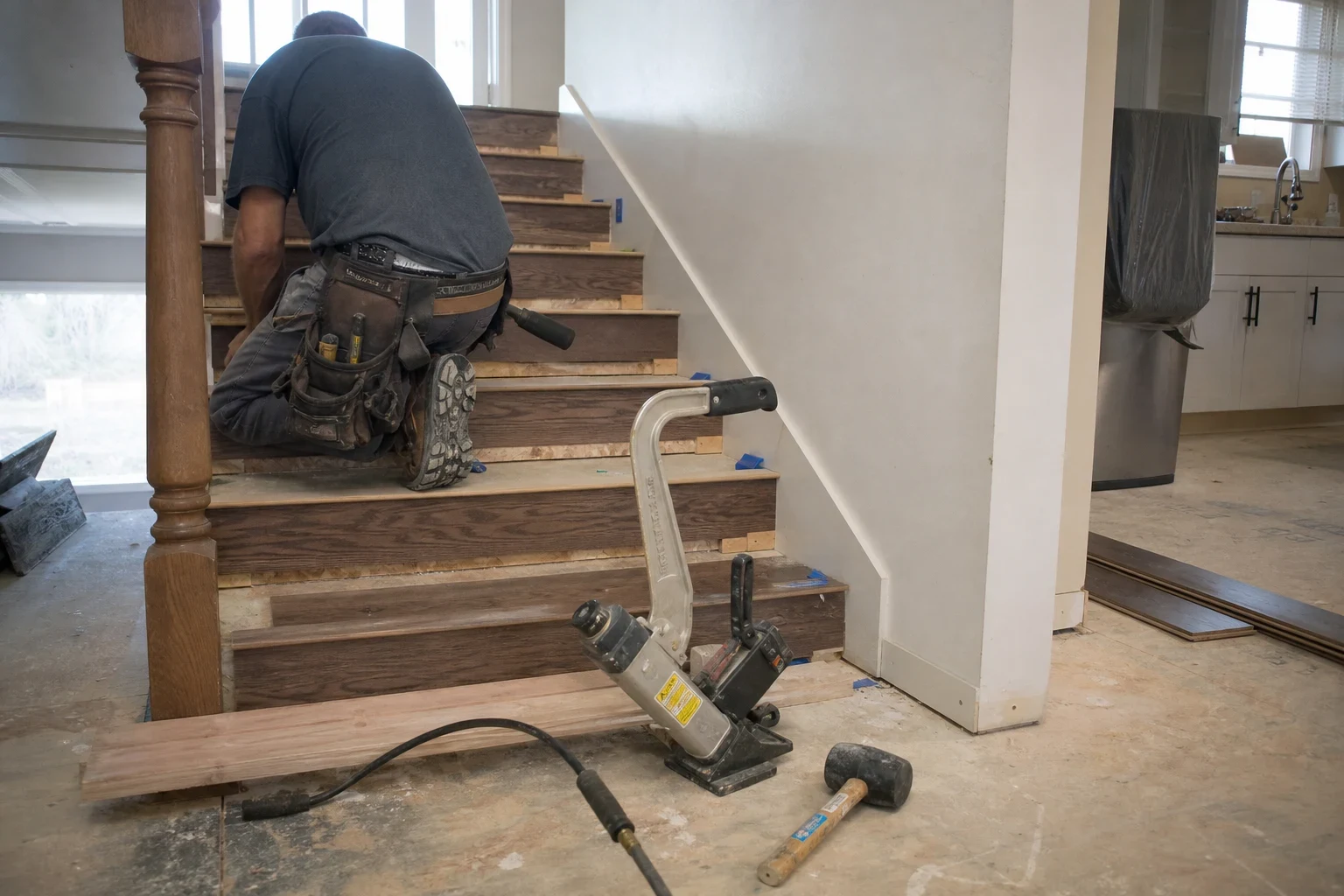
Stairs Are Their Own Job
A staircase looks like a small area. It isn't. Each step has a tread, a riser and a nose, and each one gets measured, cut and fastened on its own. A straight run of thirteen steps can take as long as a whole bedroom floor.
That is why we like to talk about stairs early. If you are putting new floors downstairs or upstairs, the stairs should be in the same plan. Matching nosing, a color that works on both levels and a budget line for the steps all get settled up front, not after the hallway is done and the stairs look out of place.
We cover stairs in hardwood, luxury vinyl plank, laminate and carpet. Most people pick the same material as the floor the stairs connect to, but that is not a rule. We'll tell you what holds up best on your steps and why.
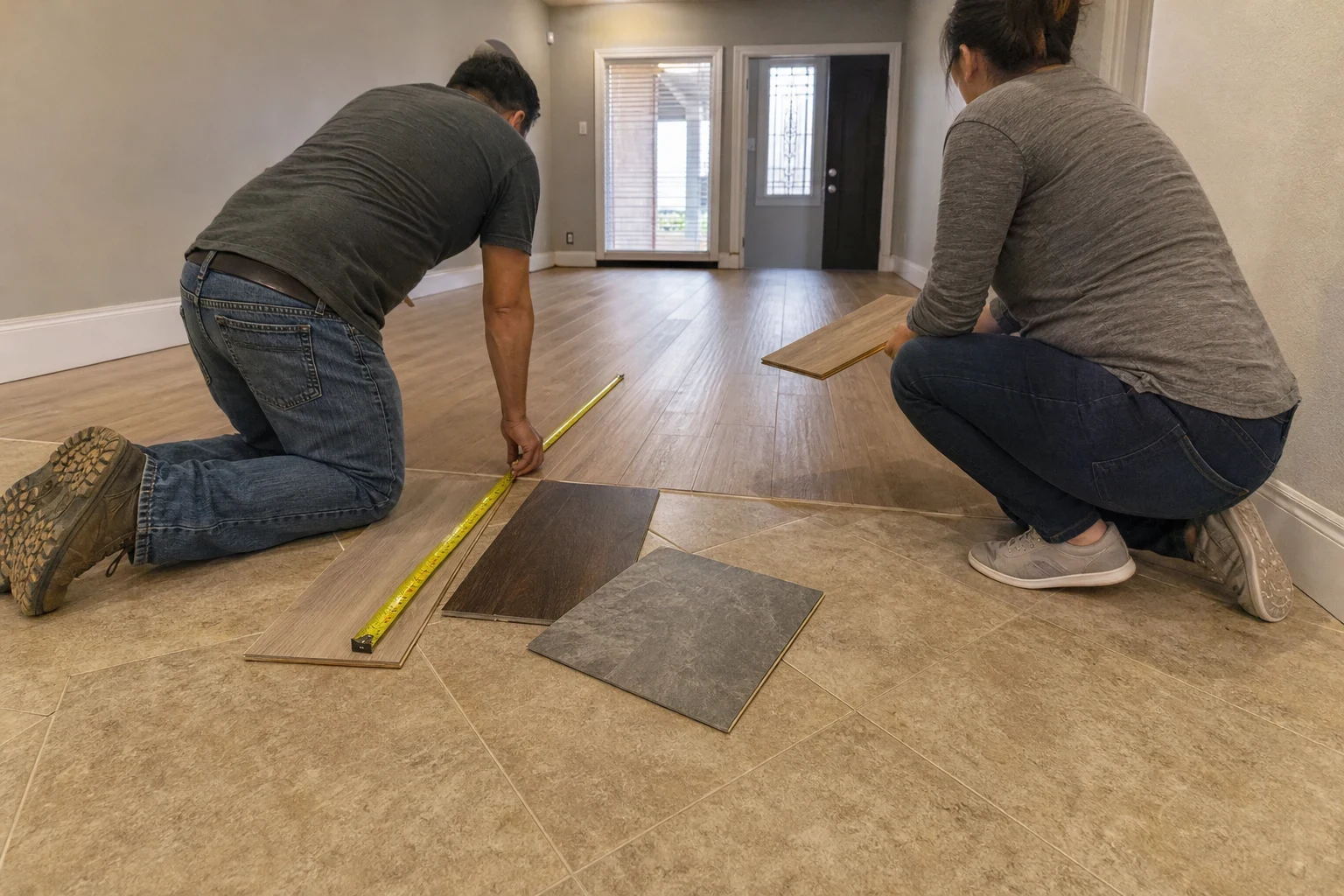
What the Work Covers
- 01
Removing the old covering
We pull up old carpet, pad, tack strip and staples, or take off worn treads. Every staple comes out so nothing pokes through the new surface.
- 02
Tightening the structure
Loose treads and squeaks get fixed before anything goes on top. We screw down or glue what moves. Covering a squeak only hides it for a while.
- 03
Treads and risers
Each tread is measured and cut to its own step, since few staircases are perfectly square. Risers are covered in matching material or a paint-grade board, your choice.
- 04
Stair nosing
The front edge of each step takes the most wear and matters most for safety. We use solid nosing matched to your floor so the edge is firm under your foot, not a thin lip that flexes.
- 05
Landings and open sides
Landings get the same material as the steps. Open sides with exposed tread ends need finished returns, and we plan for those when we measure.
- 06
Cleanup
Stair work makes dust and scraps on two floors. We clean the stairs, the hall at the bottom and the area at the top before we leave.
Questions about Stair Flooring?
Call(346) 676-8873Signs Your Stairs Need New Flooring
Worn paths in the carpet
Matted, flattened spots in the middle of each step mean the pad underneath is crushed. That carpet is thinner than it looks and gets slick at the edge.
Squeaks and soft steps
A step that creaks or gives a little usually has a loose tread. It is easiest to fix when the covering is off anyway.
Loose or chipped nosing
If the front edge of a step wobbles, lifts or has a broken piece, someone can catch a heel on it. This one is worth putting at the top of the list.
New floors planned nearby
If you are replacing the floor at the top or bottom of the stairs, now is the time. Doing both together gets you a clean match and one round of work in your home.
Stains and frayed edges
Stairs show wear faster than rooms. When cleaning no longer brings them back, new covering is often a smaller job than people expect.
How a Stair Job Goes
- 1
Measure every step
We come out and measure each tread, riser and landing on its own. We check for loose steps, open sides and what is under the current covering.
- 2
Pick the material and plan
We go over what works on your stairs and how it ties into the floors around them. You get a written scope that lists each part of the job so the price makes sense.
- 3
Tear out and repair
On the day, we protect the floors at the top and bottom, remove the old covering and fix anything loose. Expect noise for the first few hours.
- 4
Install from the bottom up
We fit treads, risers and nosing one step at a time. Depending on the material and the number of steps, this takes one or two days, and we'll tell you ahead of time how long you'll be working around it.
- 5
Walk it with you
When we finish, we walk the stairs with you, check every step for movement and clean up.
What Moves the Price on Stairs
Stairs are priced by the step, not by the square foot, because the labor is in the cutting and fitting. A short straight run and a tall staircase with a turn are very different jobs. Knowing that early helps you set the stairs as their own line in your flooring budget.
- Number of steps and landings
- More steps means more pieces to cut and fasten. Landings add area and extra transitions.
- Shape of the staircase
- Straight runs are the simplest. Winders, curved steps and open sides with exposed tread ends take far more cutting and finish work.
- Material choice
- Carpet usually goes fastest. Hardwood, vinyl plank and laminate need matched nosing and careful cuts on every step, which adds time and parts.
- What is underneath
- If old carpet comes off to reveal rough or particleboard treads, they may need to be capped or replaced before hard flooring can go on. We look for this when we measure so it is in the plan, not a surprise.
- Risers and trim
- Matching risers, painted risers and new trim along the walls each change the total. We list them separately so you can choose.
Stair Flooring Questions
Can you put hardwood or vinyl on stairs that have carpet now?
Usually, yes. Under most stair carpet is rough wood or particleboard that was never meant to show. We cap those steps with new treads and risers, or replace the treads, so the hard surface has a solid base. We check what you have when we measure.
Do the stairs have to match my floors?
No, but most people want them to tie in. The easiest match is the same product with its matching nosing. If your floors are carpet and you want hard stairs, or the other way around, we'll help you pick something that looks planned.
Is vinyl plank slippery on stairs?
Vinyl plank with a textured surface and proper nosing grips well in socks and bare feet. The trouble comes from cheap overlap nosing that flexes at the edge. We use nosing fastened solidly to the step so the edge stays firm.
Can we use the stairs while you work?
Mostly not during the work itself, especially with hard flooring while adhesive sets. We'll plan the order so you can still get up and down at the end of the day when possible, and tell you ahead of time if there's a stretch when you can't.
Should I do the stairs now or wait until the rest of the floors?
If other floors are coming in the next year or two, plan them together, even if the work happens in stages. That way you buy matching material from the same run and the stairs aren't the odd piece out later.
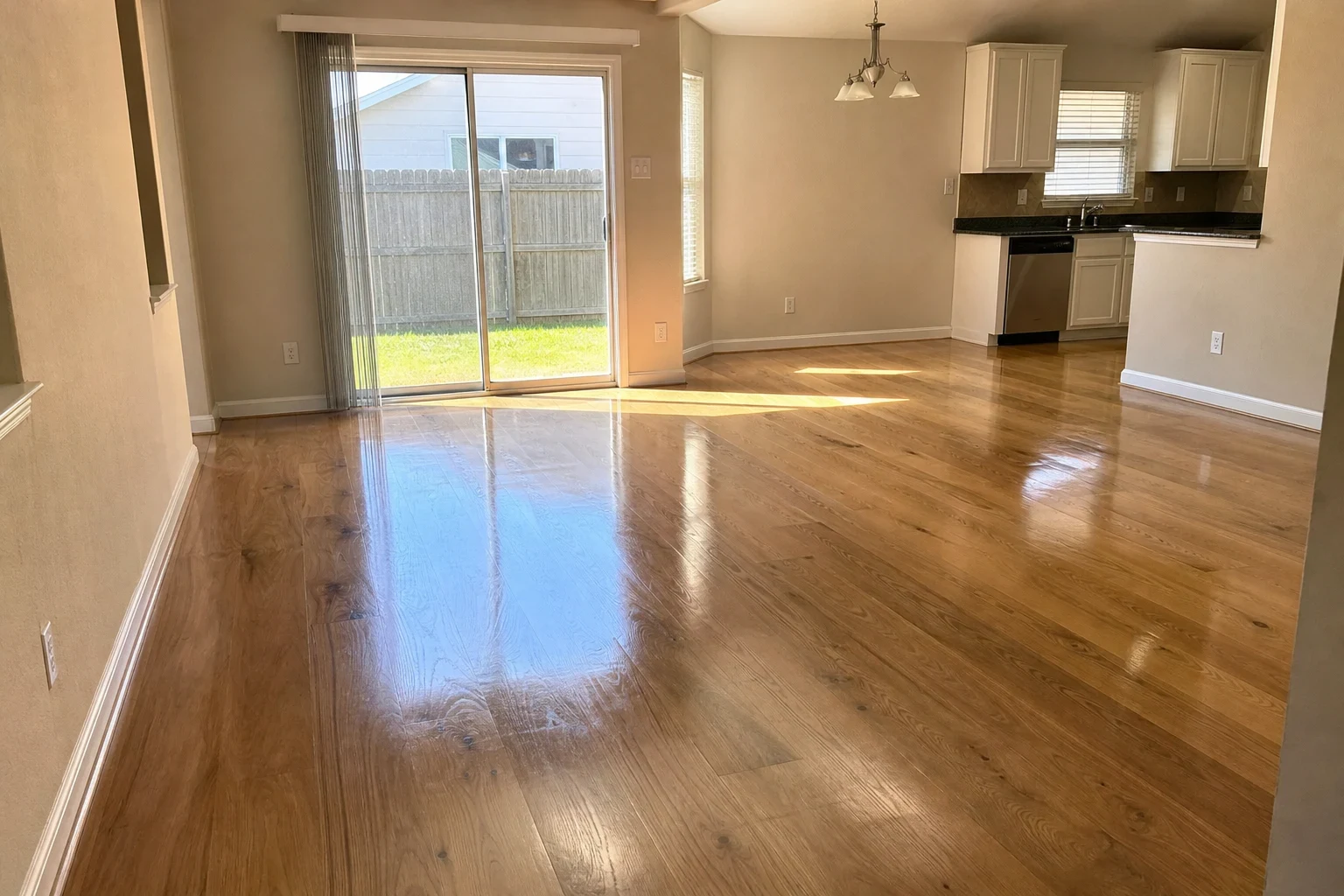
Get Your Stairs Into the Plan
Tell us how many steps you have and what floors meet them at the top and bottom. We'll set up a time to measure and give you a clear scope so you can budget the stairs before they become a problem.