ServicesHardwood Flooring
Hardwood Flooring in Seabrook
We install solid and engineered hardwood in your home, and we like to plan it with you early. That means moisture readings, the right wood for your subfloor and a written estimate, so you can budget and pick your dates before anything gets torn out.
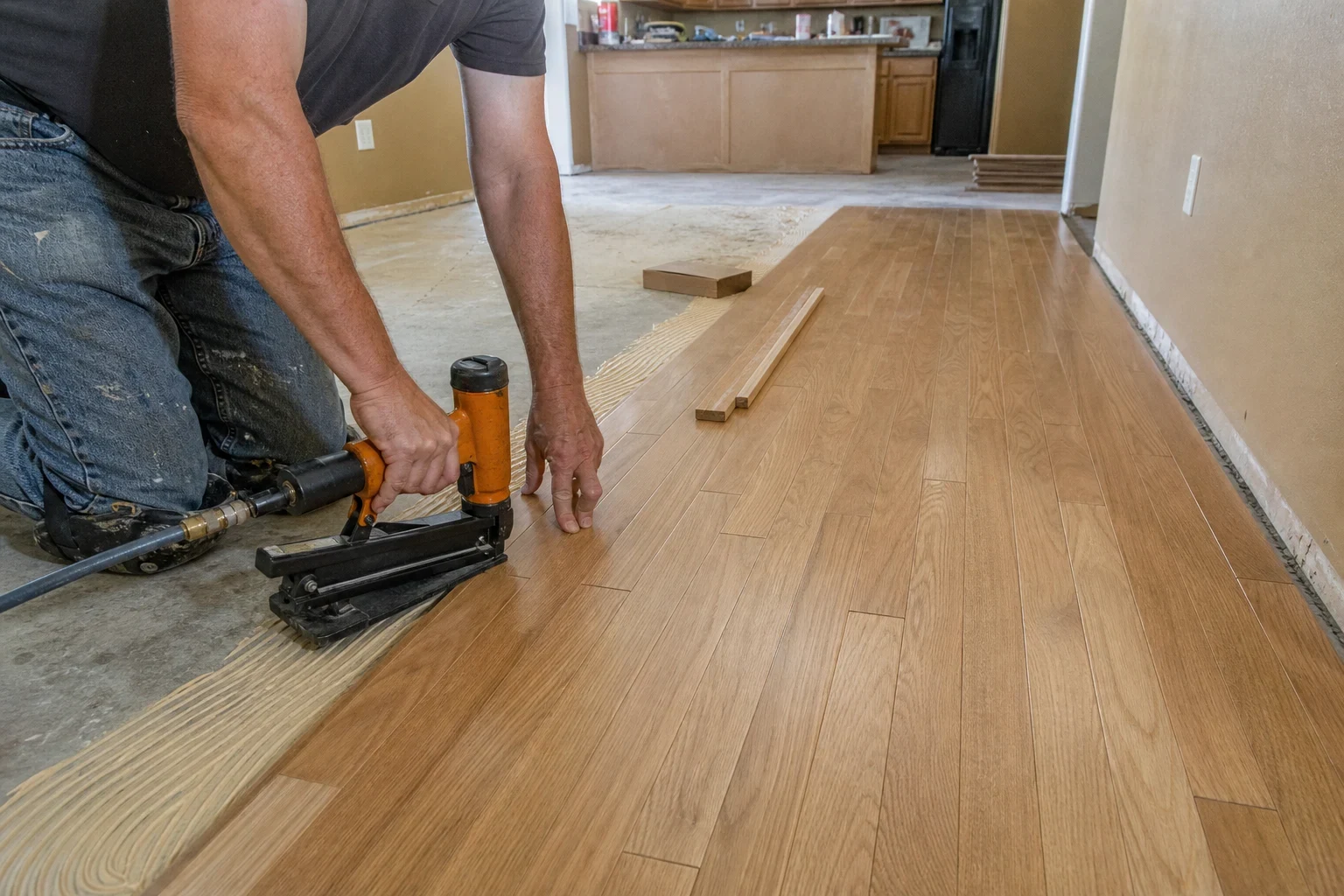
Real wood, planned before it goes down
Hardwood is a long-term floor. It looks warm, it lasts for decades and buyers like it. It also moves. Wood takes on moisture in humid months and gives it back when the air conditioning runs dry, so boards swell and shrink with the seasons.
Most homes around Seabrook sit on concrete slabs, and the air stays damp much of the year. That's why we often point people toward engineered hardwood. It has a real wood top layer over a stable plywood core, and it handles slabs and humidity better than solid boards. Solid hardwood still makes sense over a wood subfloor, like a second story or a raised home.
The best time to call is before the old floor gives out. Plan a few months ahead and you can save for it, order the wood without rushing and schedule around holidays or guests.
What our hardwood installs include
- Moisture testing first
- We check the slab or subfloor with a meter before we quote. High readings mean a vapor barrier or a different product, and you hear about it up front, not on install day.
- Help picking the product
- We walk you through solid versus engineered, plank width, species and finish sheen. Wider planks and harder species cost more, and we show you where the money goes.
- Tear-out and haul-away
- We pull up old carpet, tile or vinyl and take it with us. Tile glued to a slab is the slowest to remove, and we price it honestly.
- Subfloor prep
- We grind high spots, fill low ones and stop squeaks so the new floor sits flat. Skipping this step is how floors end up sounding hollow or popping underfoot.
- The right install method
- Engineered boards over concrete get glued down or floated. Over plywood we nail down. We follow the maker's instructions for your product and subfloor.
- Trim and transitions
- We undercut door jambs, set baseboards or quarter round and fit clean transitions where the hardwood meets tile or carpet in the next room.
Signs it's time to plan a new floor
Carpet past its best
Matted halls and stains that won't lift mean carpet is near the end. Start planning now and you choose the timing, not the stains.
Cracked tile or lifting vinyl
Cracked tiles and curling seams only get worse. Hardwood is one answer. If a room sees water, we'll also talk through tile flooring or luxury vinyl plank.
Soft or squeaky spots
A floor that gives underfoot can mean trouble in the subfloor. It's cheaper to fix while it's small and planned than after it spreads.
Cupped or buckled boards
Board edges higher than the centers usually point to moisture coming from below. We find the cause before we put new wood down.
A move or remodel coming up
Selling next year or redoing a kitchen? New floors are easier before furniture comes back in, so get them on the schedule early.
What moves the price of a hardwood floor
We don't give a number until we've seen the floor and taken readings. Hardwood prices swing more than most flooring, but the big drivers are easy to explain. Knowing them early helps you set a budget and decide where to spend.
Product, species and width
Engineered boards with a thicker wear layer cost more than thin ones. White oak and wide planks cost more than narrow red oak.
Square footage and layout
More rooms means more wood. Closets, angled walls and lots of doorways add cutting time.
What's coming out
Carpet comes up fast. Glued tile on a slab takes much longer and makes more dust.
Subfloor and moisture
Leveling a slab or adding a moisture barrier adds cost. It's also what keeps the floor flat and quiet for years.
Stairs and extras
Stairs, new baseboards and transitions add up. If stairs are part of your plan, our stair flooring page covers how we handle them.
How a hardwood job runs
- 1
Phone call and visit
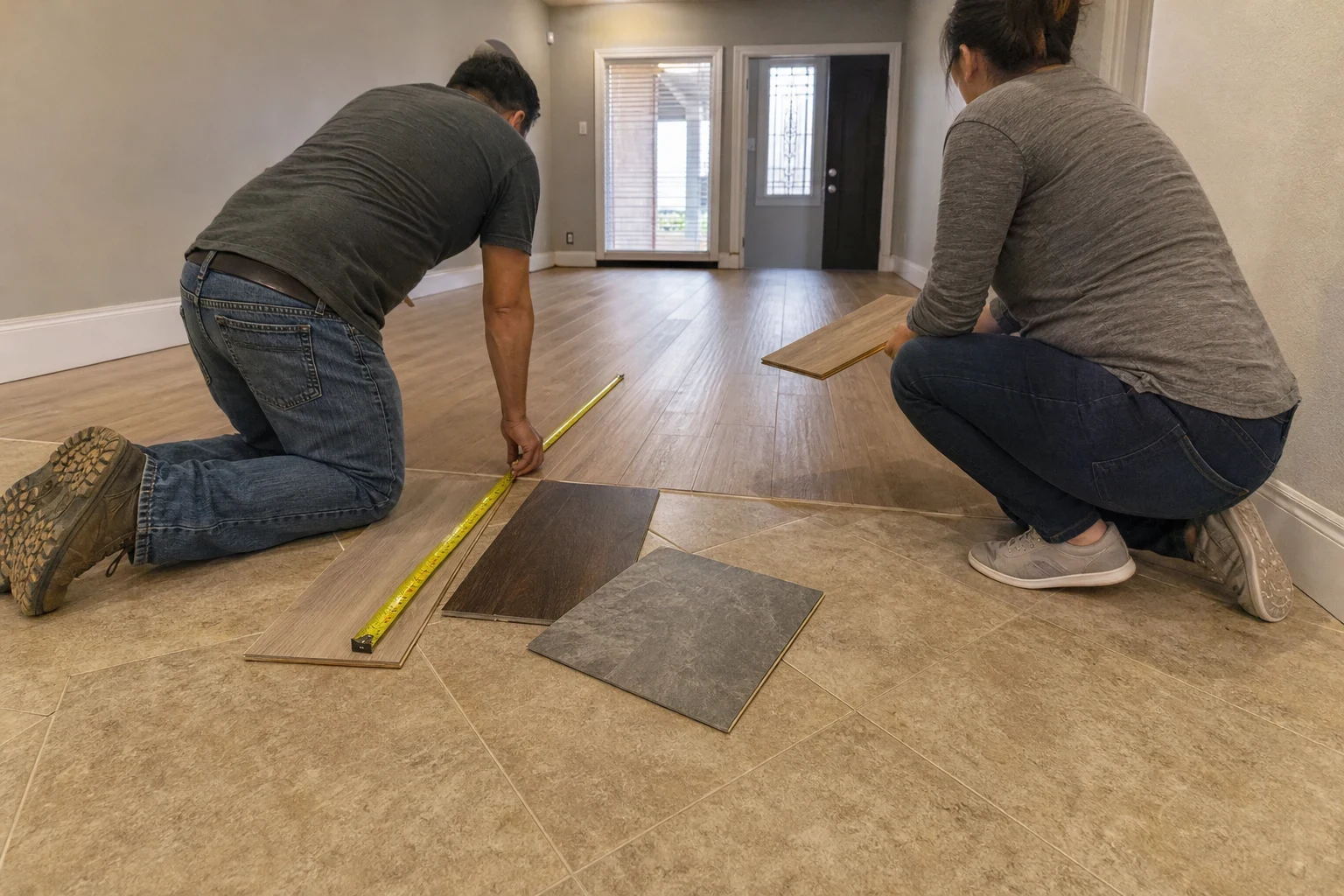
You tell us which rooms and the timeline you have in mind. We come out, measure, take moisture readings and check what's under the current floor where we can.
- 2
Written estimate and a date
You get a line-item estimate for material, prep, removal and trim. We set a start date that fits your budget, even if that's months out.
- 3
Delivery and acclimation
The wood comes to your home ahead of install so it can adjust to your indoor air for as long as the maker calls for. Keep the AC running like normal during that time.
- 4
Install days
We cover doorways and protect walls, remove the old floor, prep the subfloor and lay the new boards. How many days depends on the size of the area and how much prep it needs.
- 5
Cleanup and walkthrough
We vacuum, haul off the debris and walk the floor with you. You get simple care tips, like keeping indoor humidity steady and putting felt pads on chair legs.
Hardwood flooring questions
Can you put hardwood on a concrete slab?
Yes, usually with engineered hardwood glued down or floated over a moisture barrier. Most solid hardwood isn't made to go straight onto concrete. We test the slab first so we know which way to go.
Will hardwood hold up in a humid climate like ours?
It will if it's the right product and your AC runs steady. Engineered boards move less than solid ones. You may see small gaps in dry months, and that's normal for real wood.
How far ahead should I plan?
A few months is ideal. That gives you time to look at samples in your own light, order without a rush and set the money aside. Some species and wide planks take longer to arrive.
Do I need to leave my home during the install?
No. Most people stay. You'll lose the rooms we're working in for a few days, and tear-out is noisy. We'll tell you ahead of time which rooms to clear and when.
Is hardwood a good idea in a kitchen or bathroom?
Kitchens can work with engineered hardwood if spills get wiped up quickly. Full bathrooms are different, because standing water ruins wood. For bathrooms we usually suggest tile flooring or luxury vinyl tile.
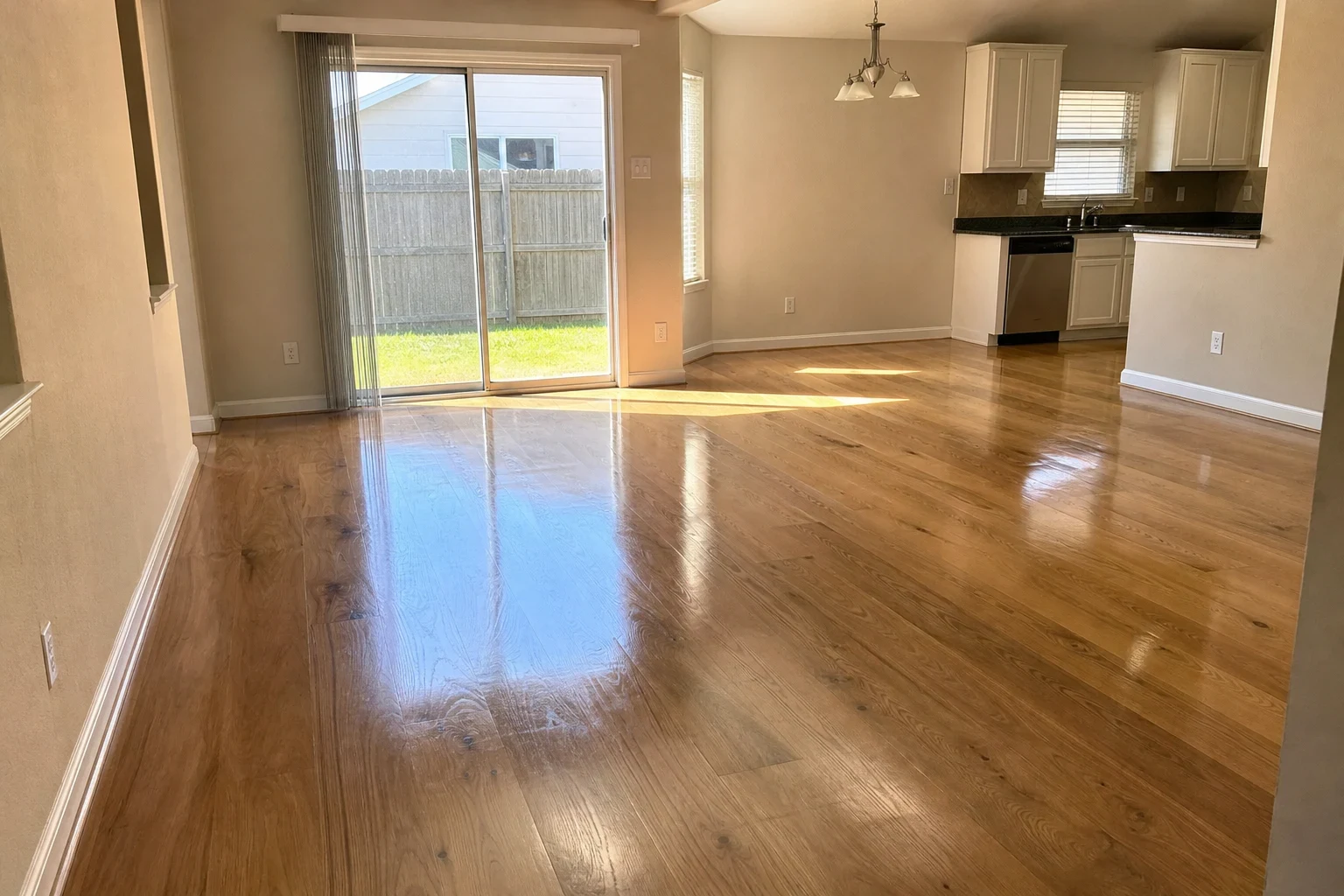
Put your hardwood floor on the calendar
Tell us which rooms and roughly when you'd like them done. We'll talk through options and costs on the phone, then set a time to come measure.